Why We Prefer Mature, Proven Artists
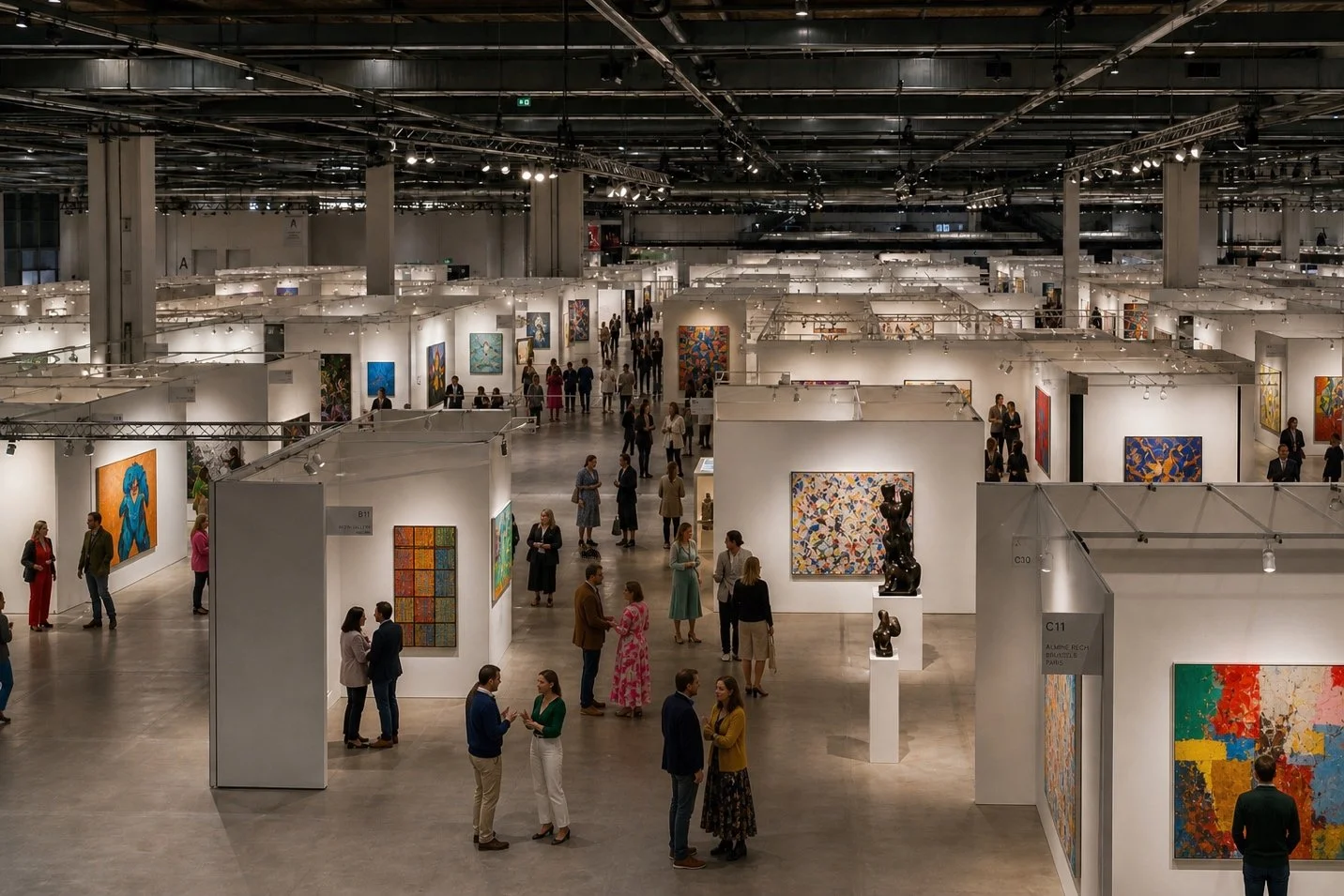
It is generally far easier to evaluate history than to forecast the future. Yet much of the art market’s attention—particularly media coverage—is directed toward emerging artists whose prices are rising rapidly while their careers are still unfolding, or toward high-priced trophy works that generate headlines. Velaras takes a different approach, focusing primarily on mature artists whose contributions can be understood through extended artistic development, institutional recognition, and a level of perspective that is rarely available early in an artist’s development.
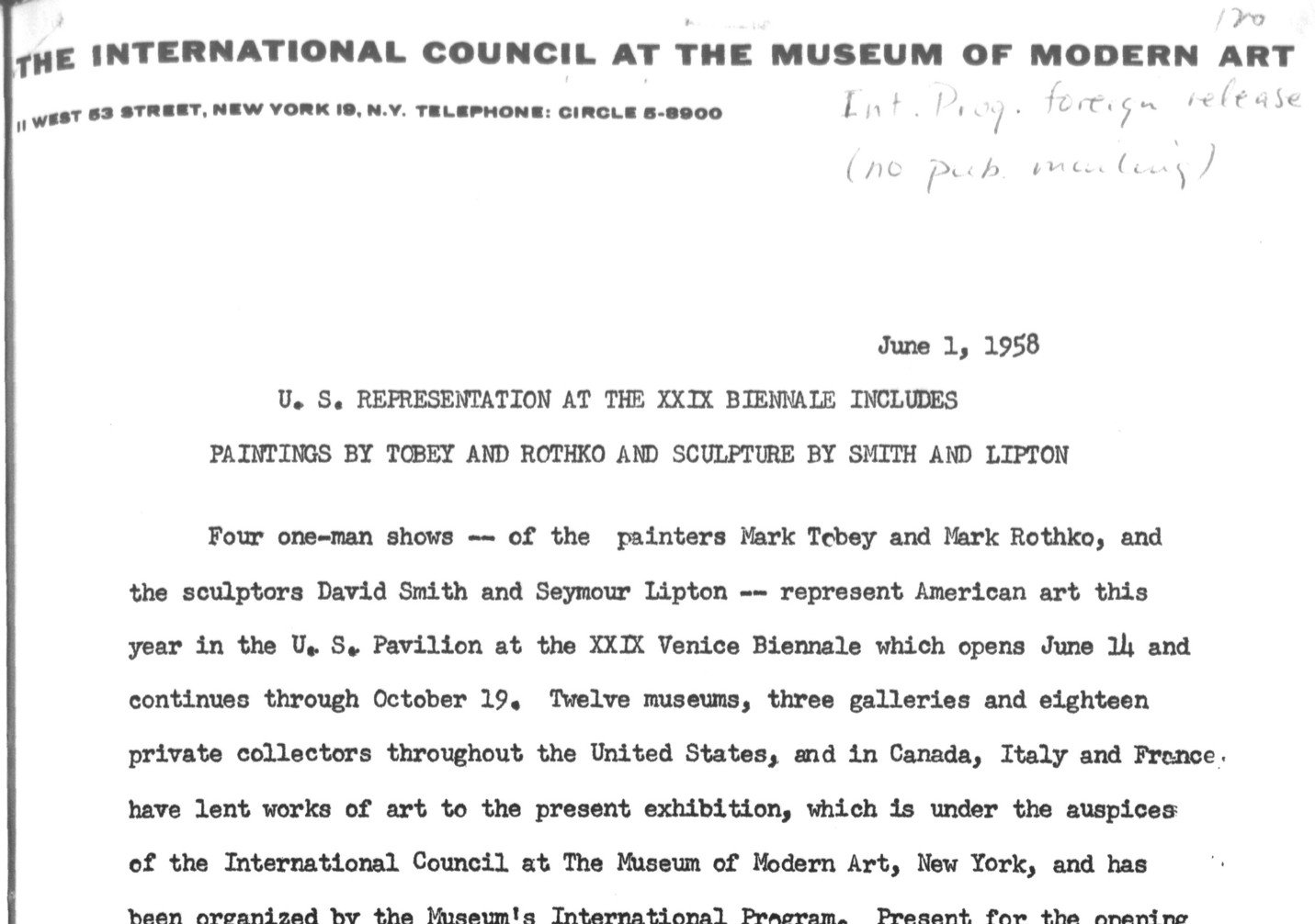
Source: The Museum of Modern Art, press release, June 1, 1958
Speculative Markets Can Be Unforgiving
Periods of intense attention toward emerging artists can create dramatic and sometimes disproportionate price appreciation before an artist’s practice has been fully developed or understood.
In these environments, prices are often influenced more by momentum, hype, and optimism than by a demonstrated artistic record. Even among experienced participants, decisions frequently involve forming views about how an artist may evolve over decades based on relatively limited output. While informed, these assessments remain inherently speculative.
History provides clear examples. During the contemporary art market surge of the early 2010s, pieces by Lucien Smith sold for nearly $389,000 at auction before later trading for under $60,000, representing declines of more than 80 percent. Similarly, works by Anselm Reyle reached auction prices above $600,000 before later transactions frequently occurred below $100,000. Other artists, including Jacob Kassay, experienced comparable cycles where prices rose rapidly before declining by more than 70 percent.
These outcomes are not isolated. They reflect a structural feature of the art landscape: when prices are established too early and historical context remains limited, they can be highly sensitive to shifts in demand.
Predicting which artists will ultimately achieve lasting significance can be difficult even for experienced participants. In many fields, early expectations fail to identify long-term outcomes. For example, Tom Brady was selected late in the draft and initially viewed as a marginal prospect, yet went on to become one of the most accomplished players in history. An artist’s trajectory can be similarly unpredictable.
In such cases, the challenge is not simply volatility, but uncertainty. Without a long track record of artistic development, institutional recognition, and critical evaluation, assessing long-term significance becomes inherently speculative.
Why This Approach Focuses on Mature, Proven Artists
Velaras’ preference for mature artists is closely connected to the broader principles that guide what we acquire, offer and are willing to stand behind. Unlike many participants in the art world, Velaras operates as a principal that commits its own capital. This reality encourages greater discipline in what is selected and why. Enduring quality that supports value retention becomes paramount and requires the clarity available from examining an extensive and evolving body of work.
For this reason, we generally focus on artists who can be evaluated through a substantial breadth of creative output. Extended periods of artistic production, exhibition history, and institutional recognition provide the context needed to assess both an artist’s contribution and the relative quality of individual pieces. While the potential upside may appear less pronounced than the rise of a newly fashionable artist, a more established record offers a stronger foundation for judgment, as narratives can shift quickly while long-term artistic development and institutional validation tend to be more enduring.
This naturally directs attention toward artists whose importance can be clearly understood through extensive careers, yet whose demand may not fully reflect that significance. Rather than attempting to anticipate which younger and relatively unproven artists may ultimately achieve lasting recognition, the focus shifts to identifying those whose contributions are already established but remain comparatively underappreciated. In these cases, decisions can be grounded in actual evidence rather than assumptions and forecasting.
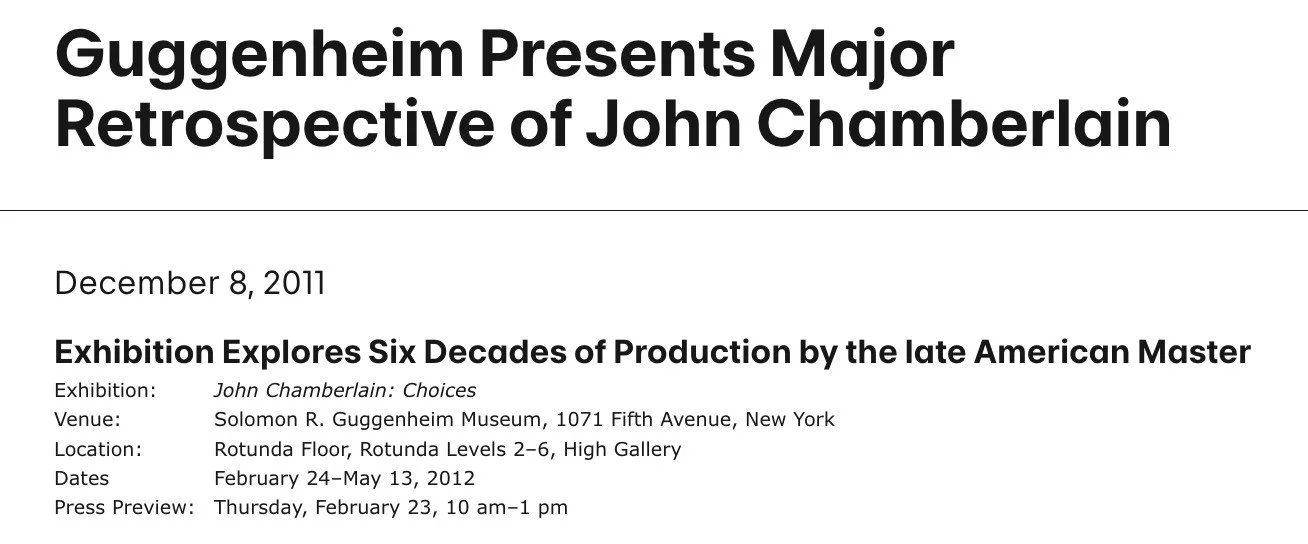
Source: Solomon R. Guggenheim Museum, press release, December 8, 2011
Institutional Recognition Generally Takes Time
Institutional recognition typically follows a long period of artistic development. In most cases, sustained output, critical engagement, and exhibition history precede major retrospectives and broader acknowledgment of an artist’s significance. This extended timeline allows for a more complete understanding of an artist’s contribution and place within art history.
There are, however, notable exceptions. Some artists receive significant institutional recognition relatively early. Frank Stella, for example, had a retrospective at the Museum of Modern Art in his early thirties, less than a decade into his career. More recently, Julie Mehretu’s retrospective at the Whitney occurred while her practice continues to evolve. These cases, while important, are relatively uncommon.
More often, meaningful institutional validation occurs much later. Lee Ufan was in his mid-seventies at the time of his Guggenheim retrospective in New York, following decades of influence within the Mono-ha movement. Similarly, Yayoi Kusama’s retrospective at the Museum of Modern Art came at age 69, following four-decades of continually expanding her signature Infinity Net motif.
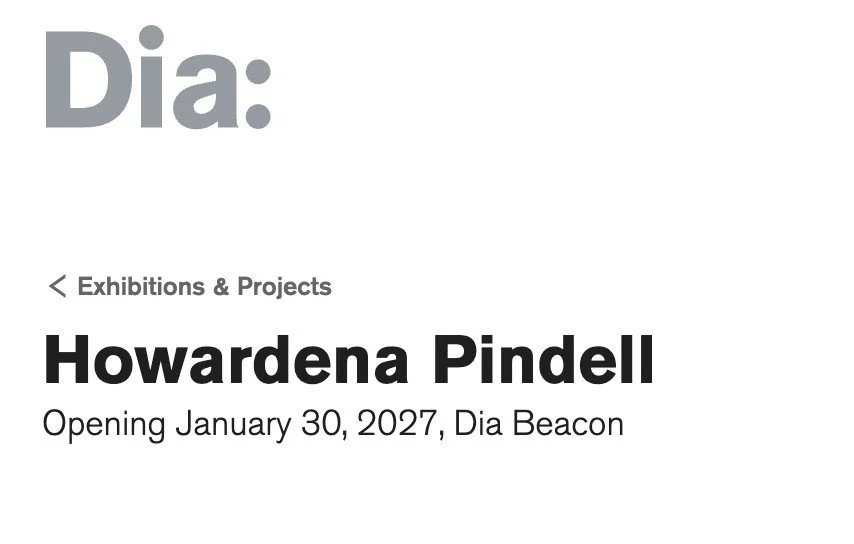
Source: Dia Art Foundation website
Distinguishing between early momentum that endures and that which fades requires a level of foresight that is inherently uncertain. As a result, the potential rewards of identifying artists who will achieve lasting historical relevance can be significant, but the risks are equally elevated.
Examples in Practice: Evaluating Complete Careers
In practice, this approach is grounded in the ability to understand complete or near-complete artistic output. Over time, we have focused extensively on artists with a robust and evolving practice. In many cases, this includes artists who were deceased at the time of our initial acquisition, allowing for a full examination of their artistic evolution, periods of strength, and overall contribution. To date, we have assembled comprehensive holdings of 37 such artists. In addition, we have built positions in more than 20 late-career artists where over forty years of production can be carefully studied and compared.
This depth of perspective allows for a more precise understanding of relative quality within an artist’s body of work and how individual pieces compare over time. It becomes easier to distinguish between periods of strength and inconsistency, identify where the most compelling examples reside, and place each within a broader context. Decisions are therefore grounded in a more complete view of the artist’s output, rather than being limited to the selection presented within a current exhibition.
Mark Tobey
Mark Tobey represents a case where historical significance was clear, yet his validation was limited at the time of acquisition. A pioneering figure associated with early developments that paralleled Abstract Expressionism, Tobey developed his distinctive “white writing” style prior to the rise of the New York School and has been widely discussed as an influence on artists such as Jackson Pollock. He also represented the United States at the 1958 Venice Biennale alongside Mark Rothko. Despite this, he has had little meaningful auction presence.
Based on an understanding of his contribution and the quality of available material, we acquired a substantial collection at levels not supported by observable auction data. In this instance, decisions were informed by historical context and relative quality rather than recent transactional evidence. Subsequent developments, including materially higher sales—primarily in the private arena— validated this decision.
John Chamberlain
John Chamberlain represents a different, but equally instructive, situation. His importance within post-war American sculpture is well established, with major retrospectives at the Solomon R. Guggenheim Museum and the Museum of Contemporary Art, Los Angeles, along with inclusion in leading museum collections such as The Museum of Modern Art, The Tate, the Art Institute of Chicago, and The Whitney Museum of American Art. His 50+ years of reimagining his core approach leaves little ambiguity as to his place in art history.
However, at various points, pricing has not fully reflected this level of institutional significance. This creates opportunities to acquire high-quality examples at levels that appear inconsistent with the artist’s established importance. In this case, the advantage lies not in identifying an overlooked figure, but in recognizing a disconnect between proven significance and prevailing values at a given point in time.
Ultimately, Velaras’ approach is to ground decisions not in forecasting what may happen, but in understanding what already has.